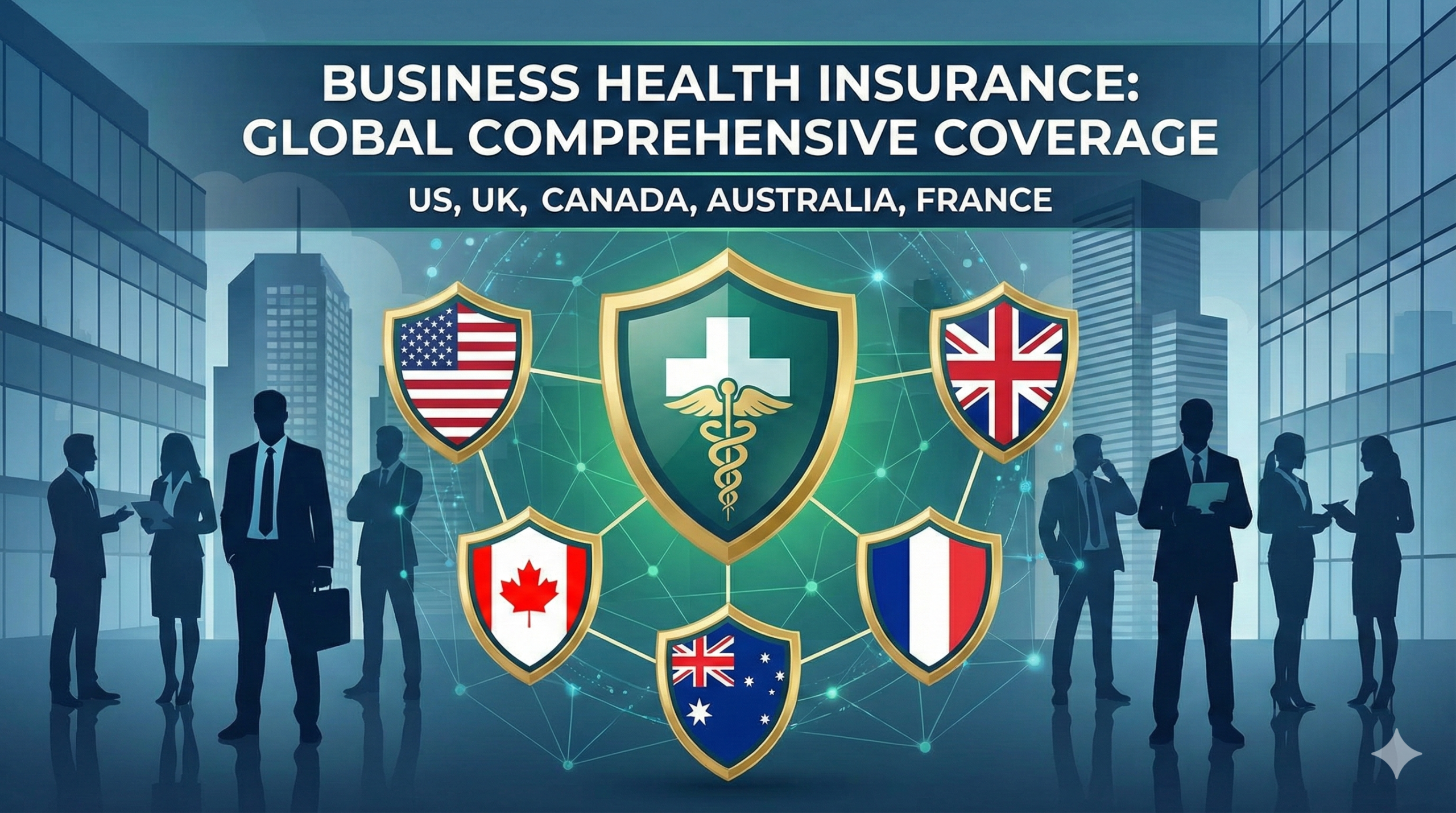
Business health insurance has become a core financial and operational priority for companies operating in developed economies. Rising healthcare costs, talent competition, and regulatory expectations have pushed employers to invest in corporate and group health insurance plans that protect both workforce well-being and business continuity.
This article focuses on business health insurance solutions designed for decision-makers actively evaluating providers and policy structures.
What Is Business Health Insurance?
Business health insurance refers to group medical coverage provided by an employer to employees and, in many cases, their dependents. These plans are typically more cost-efficient than individual policies and offer broader coverage due to risk pooling.
Companies across premium countries use health insurance as a strategic benefit rather than a discretionary expense.
Business Health Insurance in the United States
In the US, employer-sponsored health insurance is the primary source of coverage for working professionals.
Key characteristics include:
- Group PPO and HMO plans
- Executive and C-suite health insurance packages
- Lower premiums per employee compared to individual plans
- Tax-advantaged employer contributions
Businesses offering strong health insurance benefits gain a competitive advantage in recruitment and retention.
Corporate Health Insurance in the United Kingdom
UK businesses increasingly offer private health insurance to supplement public healthcare services.
Corporate plans typically provide:
- Fast access to specialists
- Private hospital treatment
- Diagnostic and preventive care
- Reduced employee absenteeism
Small and mid-sized companies often benefit from scalable group health insurance options.
Employer Health Insurance in Canada
In Canada, business health insurance focuses on extended healthcare benefits beyond public coverage.
Common inclusions are:
- Prescription drug plans
- Dental and vision insurance
- Mental health and wellness services
- Disability and income protection
Group benefits packages are widely considered standard for professional employers.
Business Health Insurance in Australia
Australian employers use private health insurance to enhance workforce healthcare access.
Corporate plans often include:
- Private hospital coverage
- Shorter waiting periods
- Allied health services
- Flexible benefit structures
Health insurance benefits are frequently integrated into broader employee compensation strategies.
Corporate Health Insurance in France
France combines public healthcare with employer-provided complementary insurance.
Business health insurance plans help cover:
- Medical co-payments
- Specialist fees
- Hospital upgrades
- Comprehensive employee coverage
Many employers are required to provide supplementary health insurance under local regulations.
Benefits of Group Health Insurance for Employers
Business health insurance delivers measurable value by:
- Reducing employee turnover
- Improving productivity and morale
- Limiting financial exposure from medical emergencies
- Supporting compliance with labor and healthcare regulations
Well-designed group plans align healthcare coverage with business risk management.
Cost Factors in Business Health Insurance
Premiums for corporate health insurance depend on:
- Company size and workforce demographics
- Coverage limits and benefit levels
- Geographic location
- Claims history
- Optional add-ons and wellness programs
Larger groups typically receive more favorable pricing due to diversified risk.
Choosing the Right Business Health Insurance Plan
Decision-makers should evaluate:
- Coverage depth and exclusions
- Network access and hospital partnerships
- Claims efficiency and support services
- Policy flexibility for future growth
Selecting the right provider ensures sustainable healthcare coverage as the organization scales.
Conclusion
Business health insurance is no longer optional in developed markets. For companies in the US, UK, Canada, Australia, and France, group health insurance plans play a critical role in workforce stability, financial planning, and long-term operational resilience.