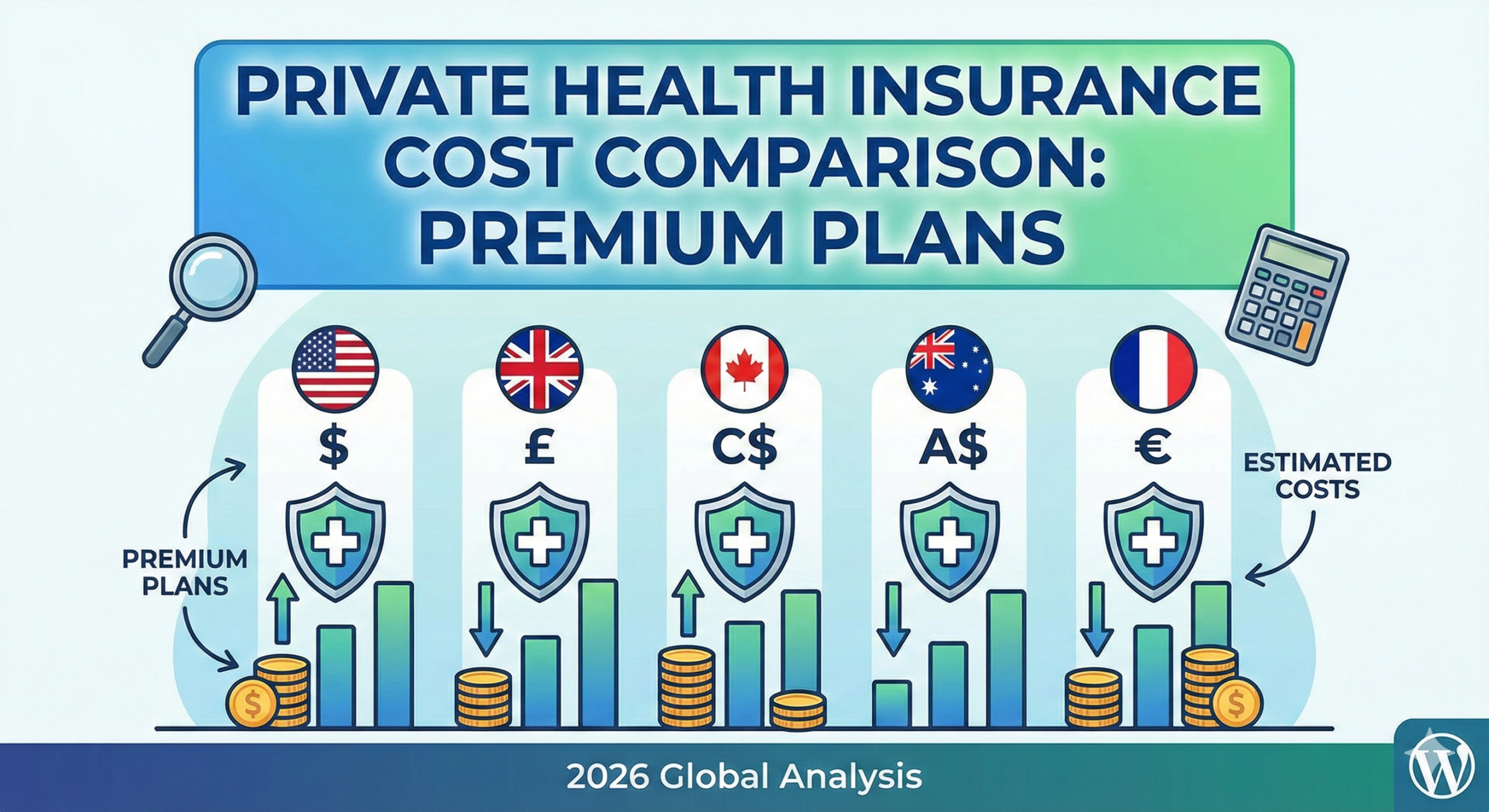
Private health insurance costs have increased sharply across developed countries, making policy comparison a critical step before purchase. Premium buyers today are not looking for the cheapest option—they are looking for cost-efficient coverage that minimizes financial risk while maximizing access to high-quality healthcare.
This article focuses on private health insurance pricing, premium structures, and cost drivers in the United States, United Kingdom, Canada, Australia, and France.
What Determines Health Insurance Costs?
Health insurance premiums are calculated using multiple financial and risk-based factors, including:
- Age and medical history
- Type of coverage (individual, family, or corporate)
- Inpatient and outpatient limits
- Deductibles and co-payments
- Geographic location and healthcare pricing
- Policy add-ons such as mental health and international coverage
Understanding these variables helps buyers avoid underinsured or overpriced policies.
Health Insurance Costs in the United States
In the United States, private health insurance premiums are the highest globally due to medical service pricing and administrative costs.
Typical annual costs:
- Individual health insurance: high monthly premiums with deductibles
- Family health insurance: significantly higher due to dependent coverage
- Employer-sponsored plans: partially subsidized but still costly
Premium plans focus on extensive hospital networks, specialist access, and reduced out-of-pocket exposure.
Private Health Insurance Pricing in the United Kingdom
Private health insurance in the UK is commonly used alongside public healthcare to reduce waiting times and access private facilities.
Cost factors include:
- Level of hospital access
- Coverage for diagnostics and elective procedures
- Choice of specialist and treatment location
Corporate health insurance plans often offer better pricing per employee compared to individual policies.
Health Insurance Premiums in Canada
While Canada provides public healthcare, private insurance costs depend on supplemental benefits rather than core medical services.
Private health insurance typically covers:
- Prescription drugs
- Dental and vision expenses
- Mental health services
- Private treatment options
Premiums vary based on benefit limits and provider networks.
Health Insurance Costs in Australia
Australia’s private health insurance market offers a wide range of pricing tiers.
Key cost components include:
- Hospital-only plans
- Extras coverage for dental and allied health
- Combined hospital and extras plans
Higher-income individuals often choose private coverage to avoid public system limitations and tax penalties.
Health Insurance Pricing in France
France uses a public healthcare system supported by private complementary insurance.
Private insurance costs depend on:
- Reimbursement levels
- Hospital room upgrades
- Specialist access
- Coverage for excess medical fees
Premium policies significantly reduce out-of-pocket healthcare expenses.
Individual vs Group Health Insurance Costs
Individual health insurance premiums are typically higher due to personal risk assessment.
Group and corporate health insurance plans:
- Spread risk across employees
- Offer lower per-person premiums
- Provide broader coverage options
This makes group health insurance financially attractive for businesses and startups.
How to Reduce Health Insurance Costs Without Losing Coverage
Cost optimization strategies include:
- Choosing higher deductibles for lower premiums
- Selecting targeted coverage instead of blanket policies
- Comparing insurers and provider networks
- Reviewing policy exclusions carefully
Smart policy design often saves more money than choosing the lowest-priced plan.
Long-Term Financial Impact of Health Insurance Costs
Health insurance is a long-term financial commitment. Poor policy selection can lead to:
- High medical debt
- Limited access to quality care
- Unexpected out-of-pocket expenses
Well-structured insurance reduces financial volatility and protects long-term assets.
Conclusion
Private health insurance costs vary significantly across the US, UK, Canada, Australia, and France, but the underlying principle remains the same: higher-quality coverage reduces financial risk. Comparing premiums, benefits, and policy structures is essential for individuals and businesses seeking sustainable healthcare protection in premium markets.